
RFC MARCH 1885
The guernsey, the members tickets, and four goalposts.

Thursday March 2
Committee meeting at the Royal Hotel, chaired by George Hodges.
Secretary James Charles is appointed Richmond delegate to the VFA.
One guinea donations are received by Vice President James Francis Lancashire (former Richmond Mayor), Hodges himself, William Malone (future owner of the Corner Hotel on Swan Street by years end) and William McLachlan (owned McLachlan Bros - Hairdressers and Tobacconists with his brother George).
Here’s their advertisement that regularly appeared in the Richmond Guardian through the 1880s.


That building was renumbered in the 1890s and can now be seen above at 228 Swan Street pretty much the same (sans graffiti) on Google Maps in 2022.
THE GUERNSEY.
James Cleghorn’s tender to make the club’s first uniforms is accepted by the committee this night as well. Cleghorn was tailor, outfitter and manager of The Wholesale Clothing Company of London, located at 131 Swan St.
His store’s advertisement takes up half a column in the Richmond Guardian as you can see.
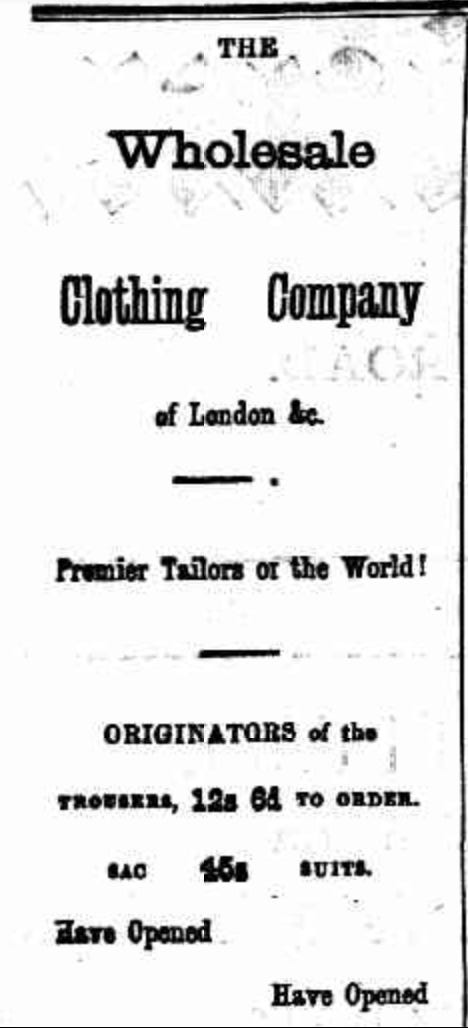
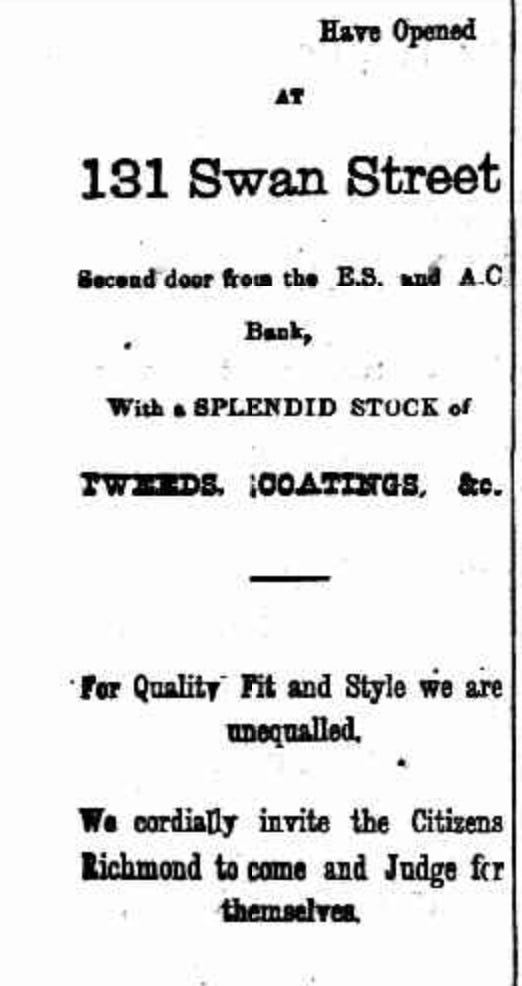
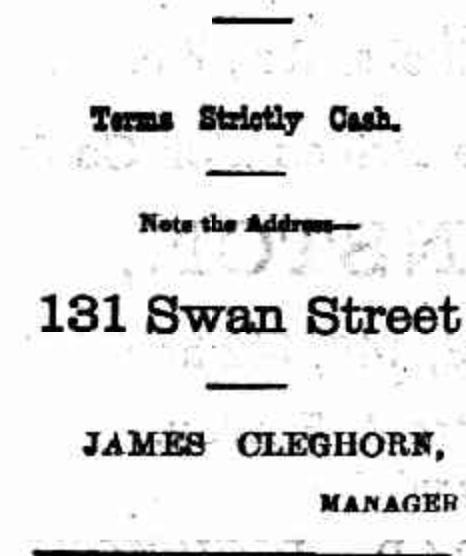
I had originally assumed that the building where our first guernseys were made is where the Grill’d Restaurant now stands at 127-133 Swan Street.
But I forgot to take note of an important factor, that the numbering of parts of Swan Street changed in the 1890s.
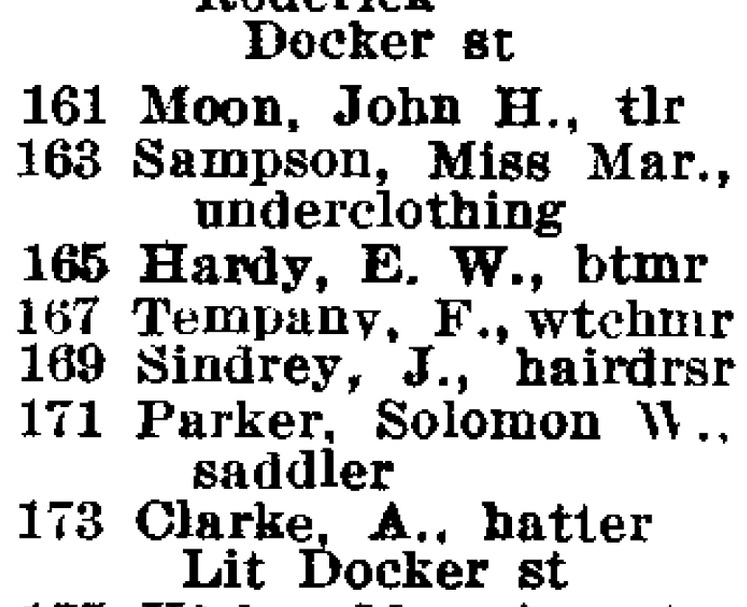
Liaising with Richmond and Burnley Historical Society President David Langdon he advised that in 1884, 131 Swan Street was:
“between Docker Street and Lt Docker Street (now Dickman St) on the north side of Swan Street”.
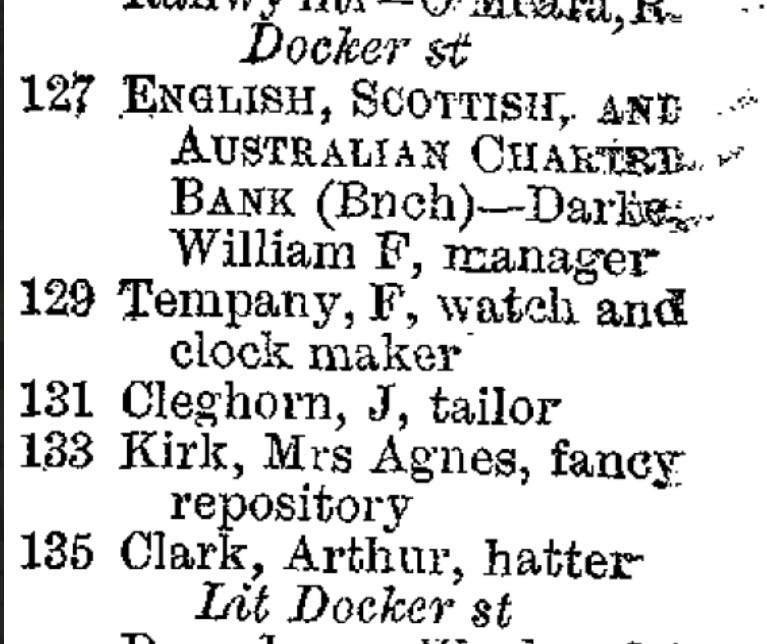
“By 1898 the numbering of this section had changed to 161 - 173 Swan Street.
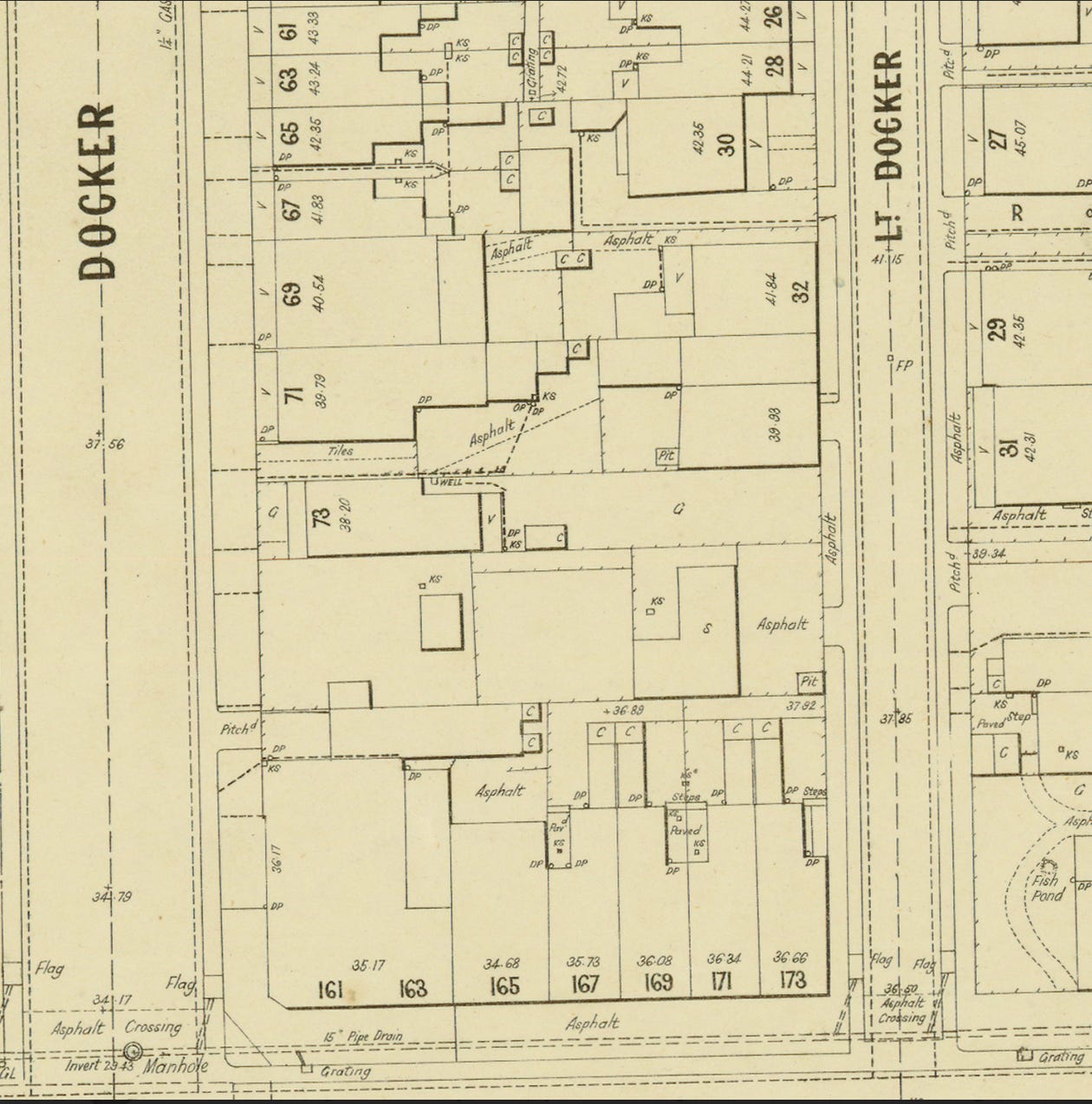
The Melbourne Metropolitan Board of Works map that show the property outline in 1898 gives an idea of the blocks of land.
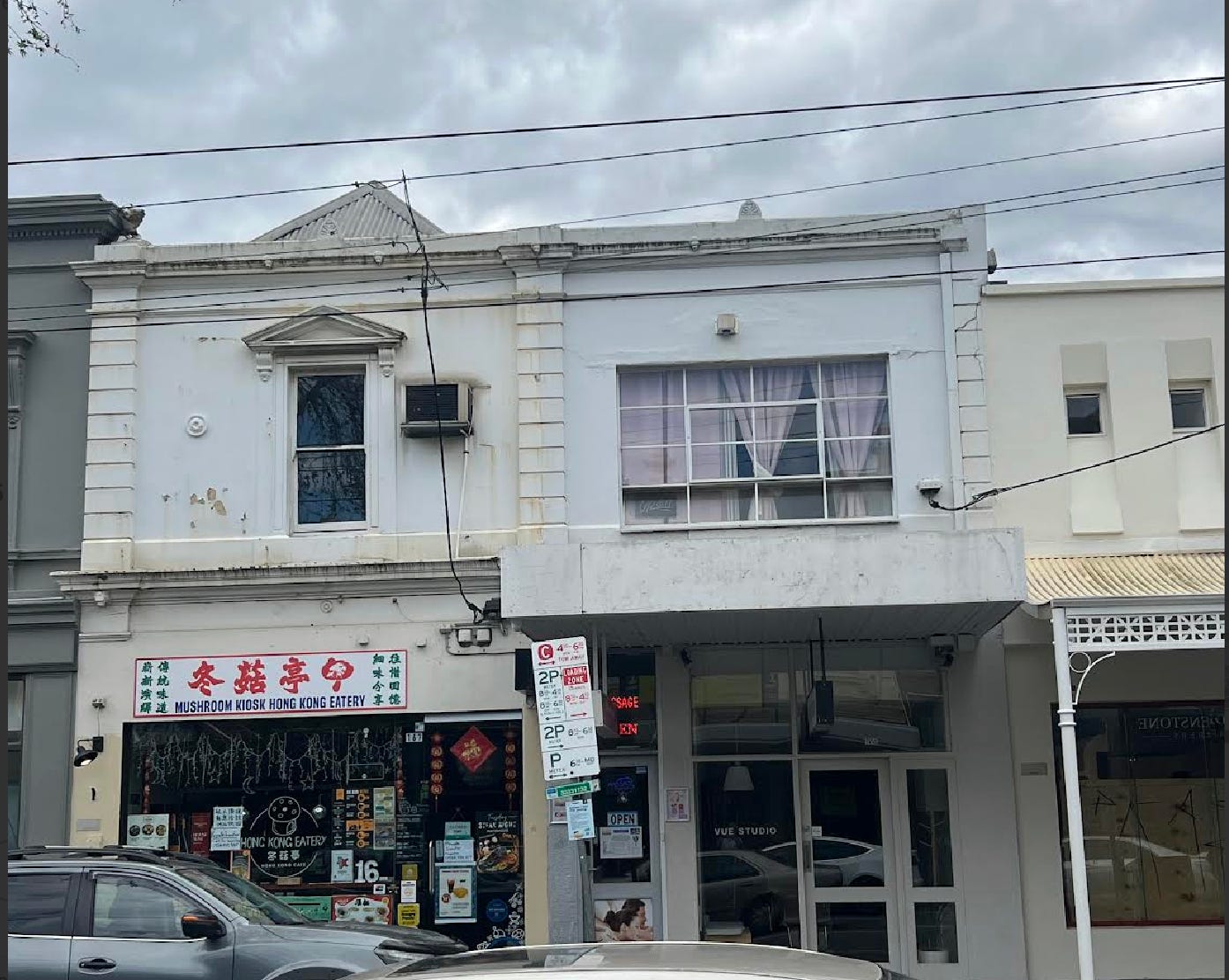
With thanks to research from Langdon as well as reader Tod Mackay, the building as it stands today is probably 169 Swan Street.
James Cleghorn died the year after he made the guernseys, aged 60. Of his eight sons, Arthur would end up playing in Richmond’s 1905 VFA premiership.
Do you think Arthur at some point that season told his teammates that his dad made Richmond’s first guernsey 20 years earlier?
Of this March 2 meeting the Richmond Guardian reports the club
“is registered and is now a recognised club in connection with the Senior Football Association, so that all that is required is the hearty co-operation of the public and earnestness on the part of the footballer of Richmond to keep to their promises and do their best for the club to make it a success in the football field”.
And the Richmond Australian (7/3) writes that the club is
“fairly set going and with very good prospects. The committee are all doing their utmost to make the thing a success and no doubt that at the end of the year if not at the top of the pole will not be far behind. What is now wanted is the whole of the Richmond football players to rally around and also the support of the public of Richmond.”
Saturday March 7
FOUNDATION MEMBERSHIPS
The 1885 membership tickets are available from today for supporters to purchase. They are 5 shillings and can be bought from members of the committee.
Over the ensuring decades, several people claimed in the press to being a foundation member from this first year. Let’s dig deep at each claim.
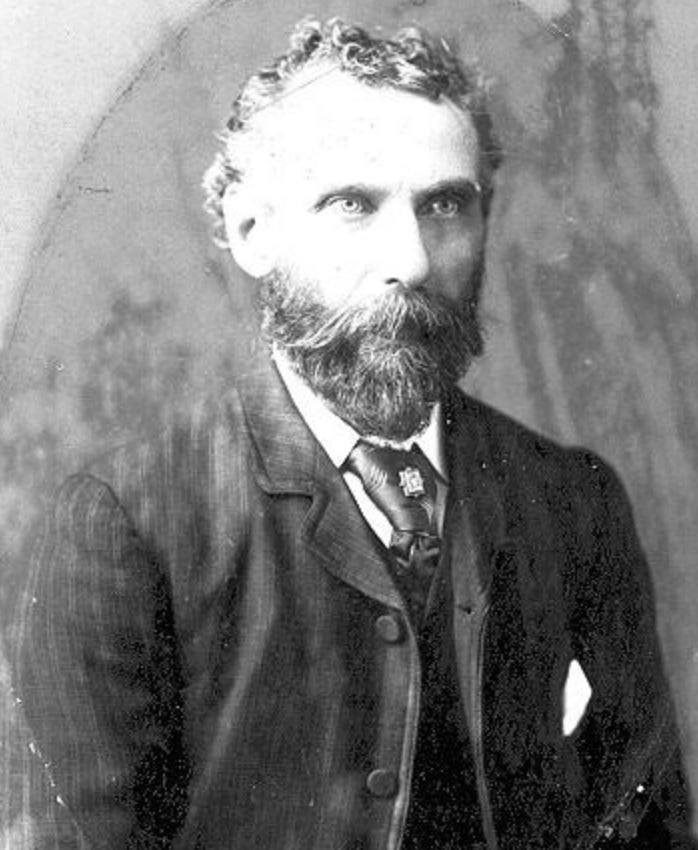
Allan J Maybury - brother of future RFC Secretary William, and future RFC player Percy. His obit in 1912 said he was resident in Richmond since 1872. He was 23 years old in 1885, and that combined with his family RFC connection makes it plausible he was a foundation member.
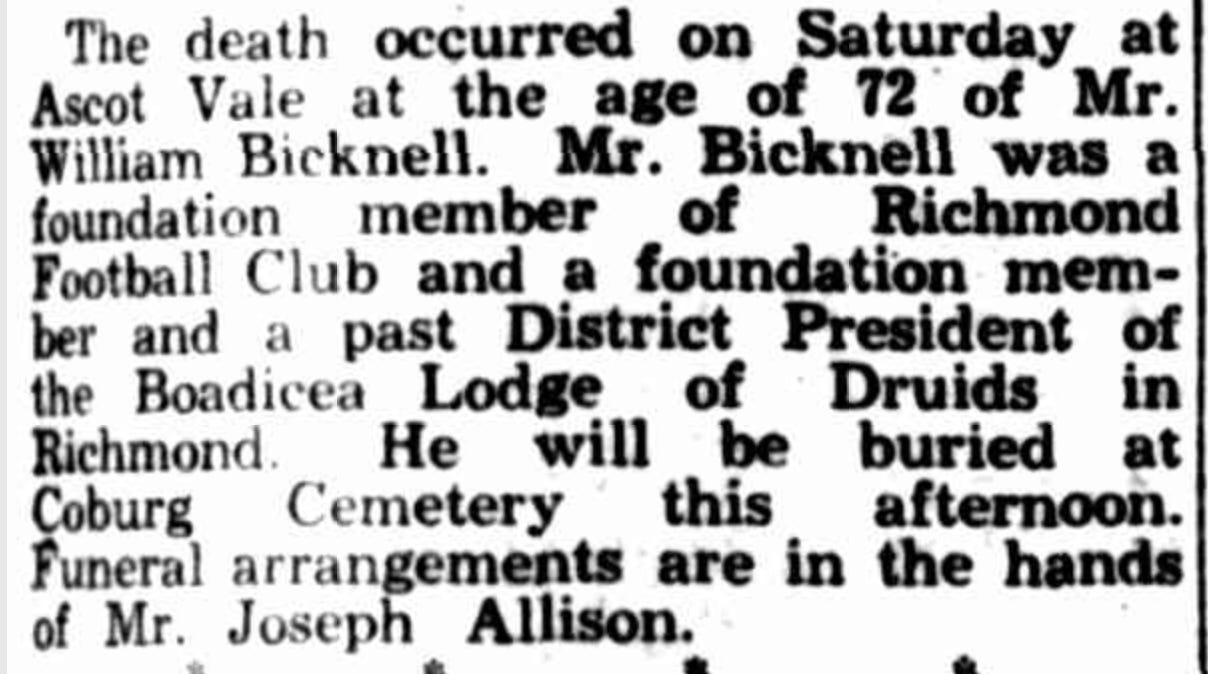
William Isaac “Billy” Bicknell would become a Richmond Committeeman from 1893-1903 and life member in 1902. He was 26 years old in 1885, and the family was living in Richmond and were noted citizens of the suburb, so plausible he was a foundation member.
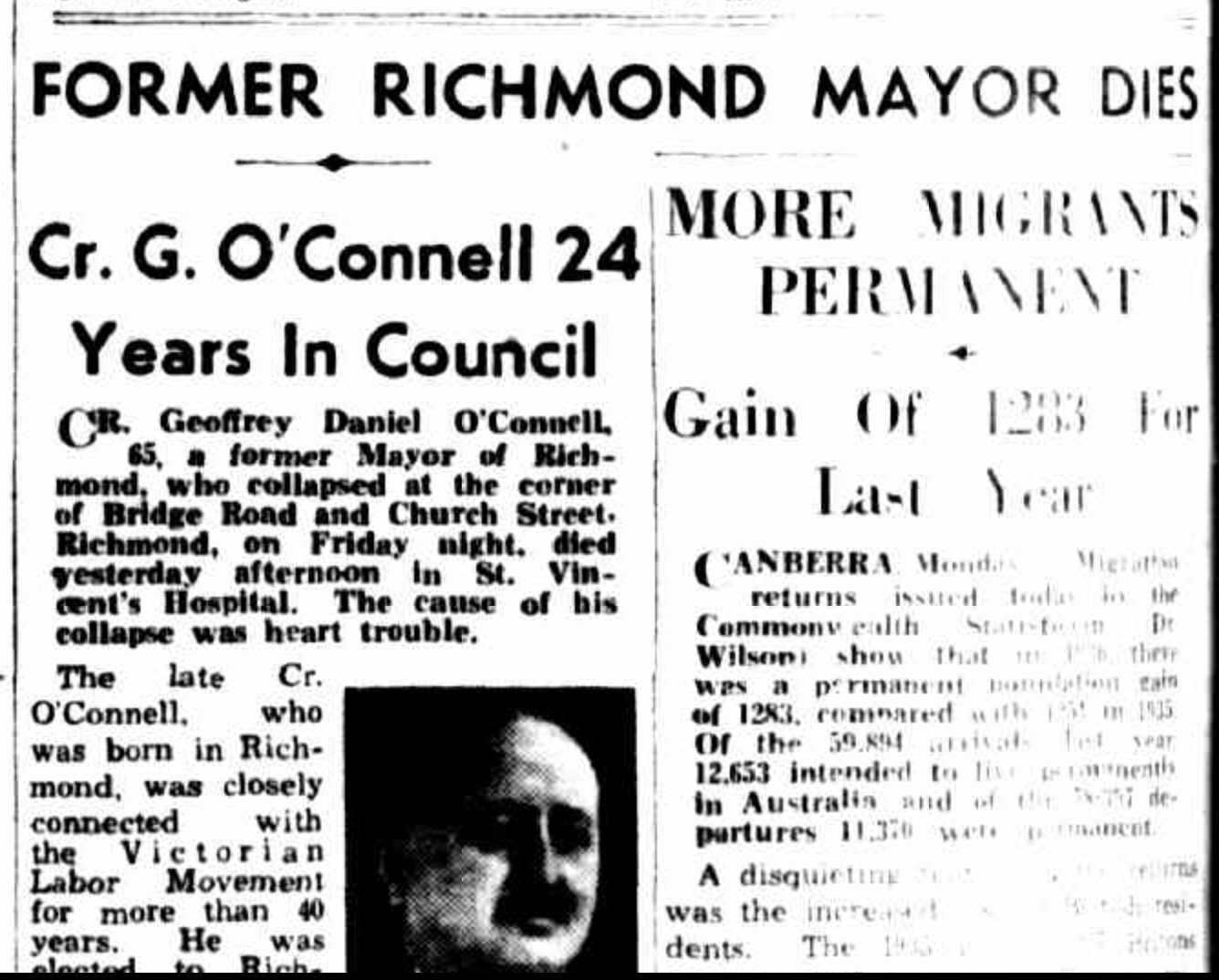
Councillor Geoffrey Daniel O’Connell died in 1937 and received a prominent obit in the Sun-News Pictorial that claimed he was a foundation member.
He was 13 years of age in 1885, so that’s a potential query but still quite possible.
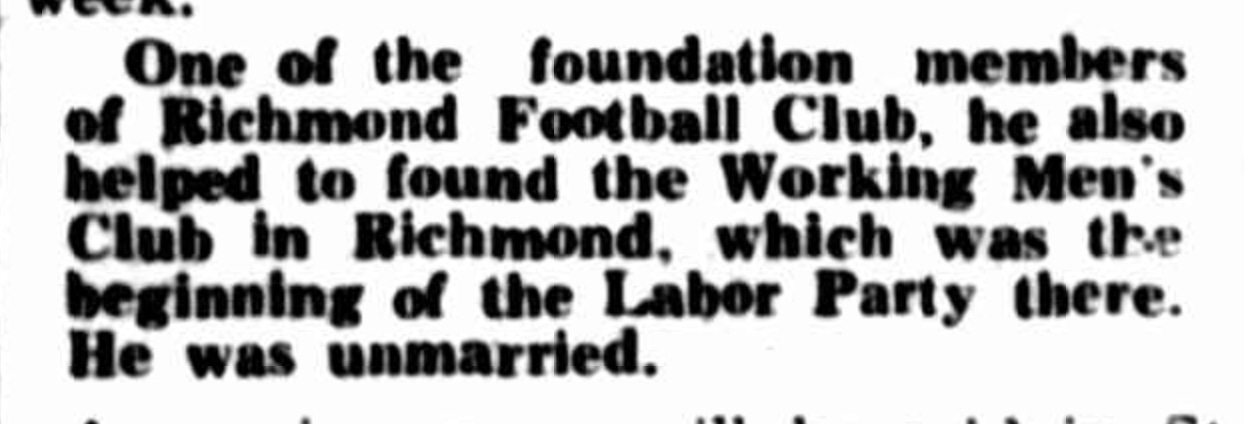
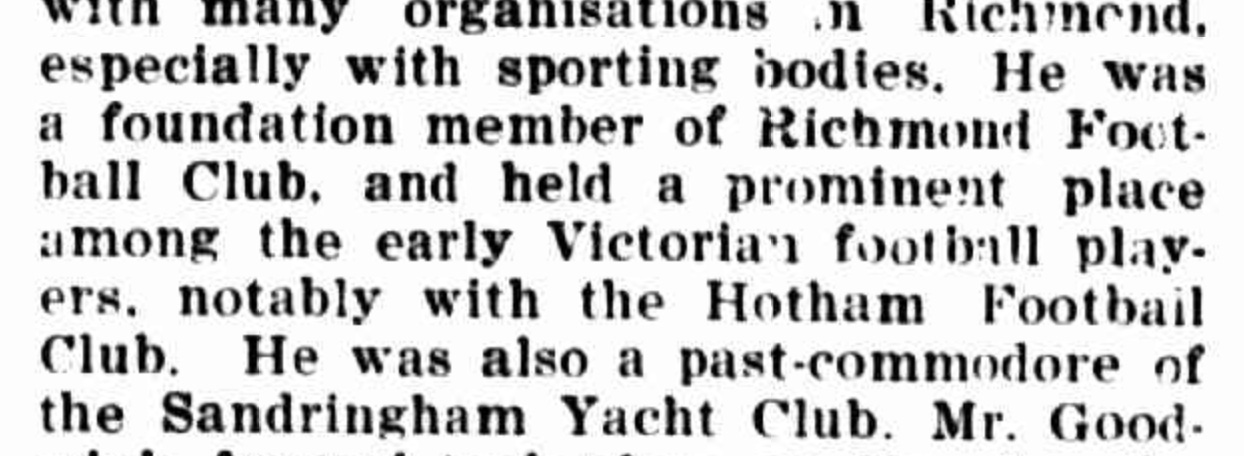
Councillor John Thompson Goodwin died in 1933, and his foundation claim is published in his obit in Labor Call and Richmond Guardian.
He was 24 years old in 1885, so that fits nicely, and as revealed in RG, he was a former player. Our research shows he played for us in 1887, so seems likely he was a foundation member two years earlier.
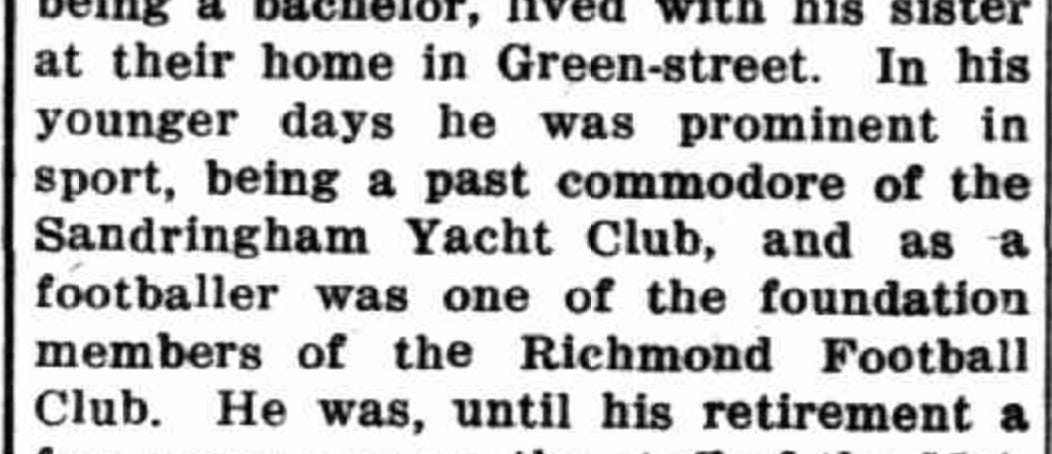
Arthur William Henry Turner obit in the 1941 Advocate says he was a foundation member, though an earlier paragraph says he was born in Retford, England in 1860 and that he
“he came to Australia in 1885 on a holiday trip, but eventually decided on settling here.”
So to be a foundation member he had to have nabbed his Richmond membership the same year he arrived in the country on a holiday.
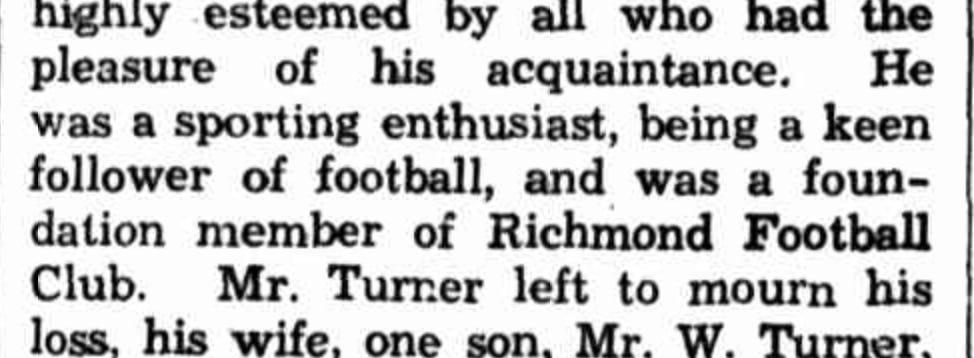
And then there is Thomas Ingram who it was claimed in The Herald in 1942 had been a Richmond member for 57 years - so back to its foundation year.
There are a handful of members roll that still exist - seasons 1905, 1909, and 1912 - and there is no Thomas Ingram listed in them. So his claim of 57 consecutive years as a member is invalid, but not to say he wasn’t a member in 1885.
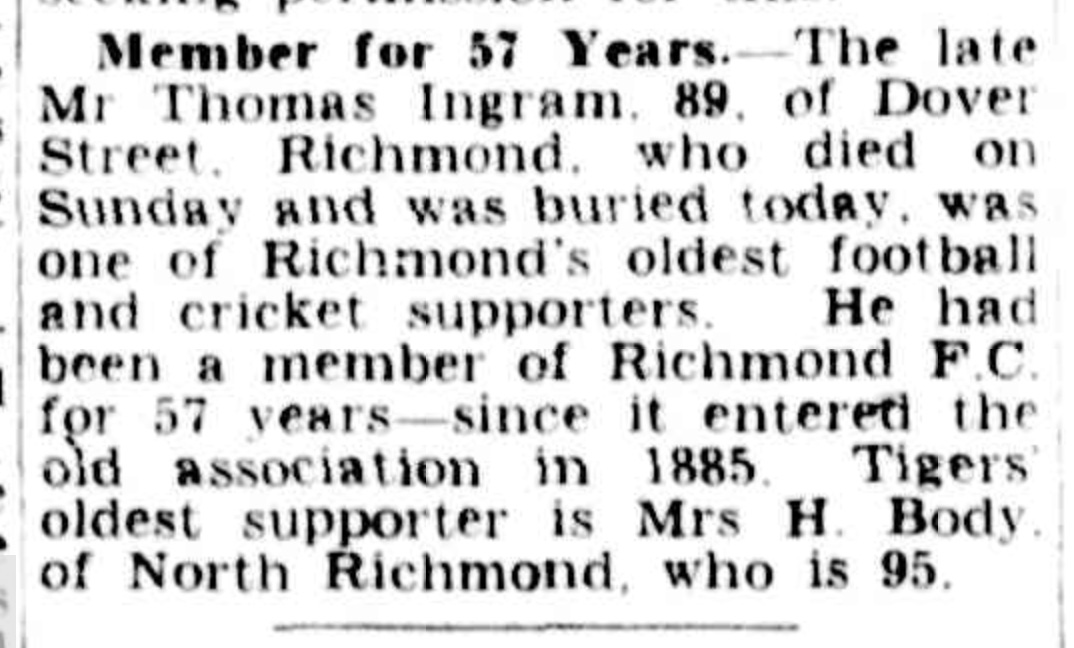
(The claim of Mrs H Body in the above article will be addressed in April 1885 post)
Thursday March 19
YELLOW AND BLACK
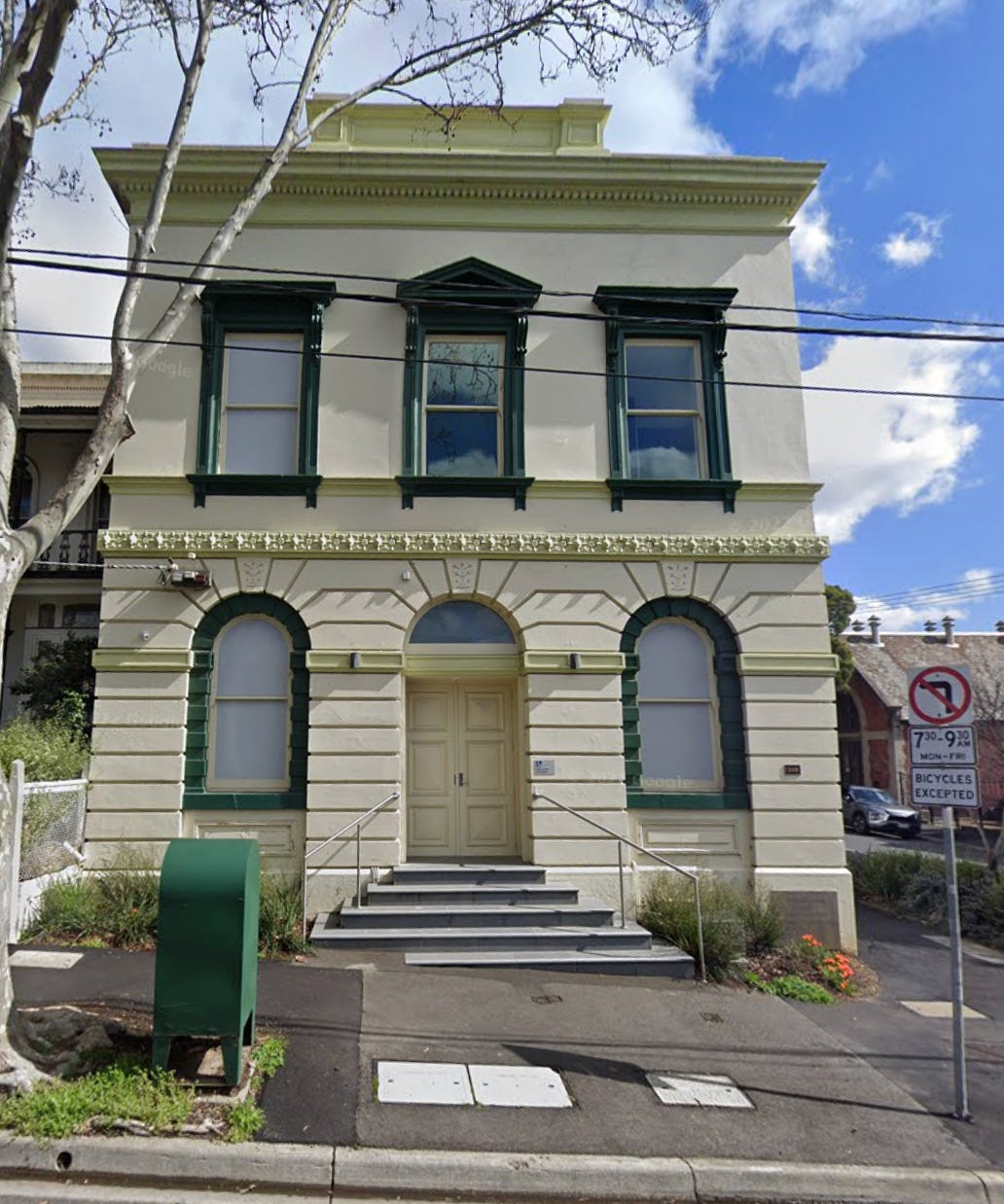
The last general meeting of the club before the season is held at the Temperance Hall, Church St 8pm. (It still stands at 297 Church Street).
The Sportsman (18/5) newspaper when advertising this meeting wrote that
"all supporters of the yellow and black stripes are urged to attend".
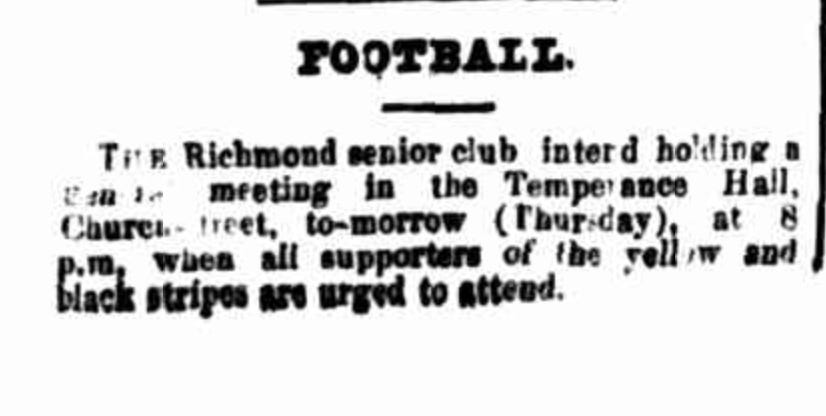
‘Yellow and Black’, a phrase made famous 70+ years later when Jack Malcomson wrote it into our themesong, but is this its earliest reference when talking about the footy team?
The Sportsman liked to use that phrase when describing the Richmond Cricket Team in the years earlier, and some papers obviously used those exact three words last month when describing the make up of the club’s guernsey, but a search on Trove does seem to show that of all the available digitised newspapers this is the first occurrence of the iconic phrase in the context of the team.
At the meeting a large attendance of footballers and supporters show their support and purchase memberships.
“It is not wanted that men say, ‘we’ll wait and see what sort of a team you get’, but to come and show the other clubs that can be (sic) put a first class team in the field.” (Richmond Australian 14/3)
Joseph Alfred Wilmoth chairs the meeting. English born, he is a barrister and solicitor, and VP of the RCC, having chaired their meetings as far back as the 1870s.
James Charles is in attendance and reads out the minutes of the committee meetings for those wishing to know particulars. (These committee minutes have not survived. The earliest the club has in its archive is 1895).
GOAL POSTS
Timber merchants Lawrence and Timothy Cremean are given “a hearty vote of thanks” for “the liberal donation of 4 goal posts” (RA 21/3) for the Richmond Cricket Ground.
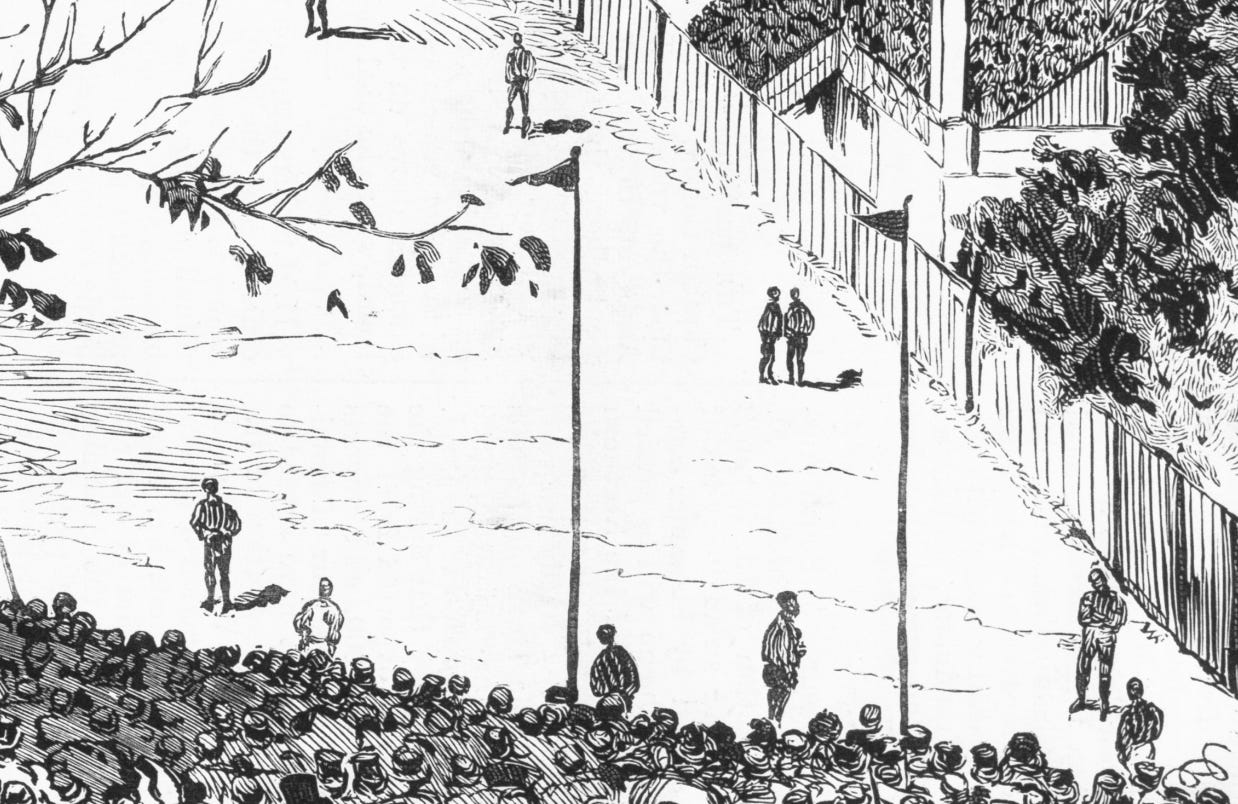
4 goals posts?! So there were no physical behind posts? (Behinds themselves were recorded, but did not count to a final score until 1897).
The zoomed in part of this August 27 1883 print of “a great match on the Melbourne football ground” shows two goal posts but no behind posts, as that game was played in a paddock.
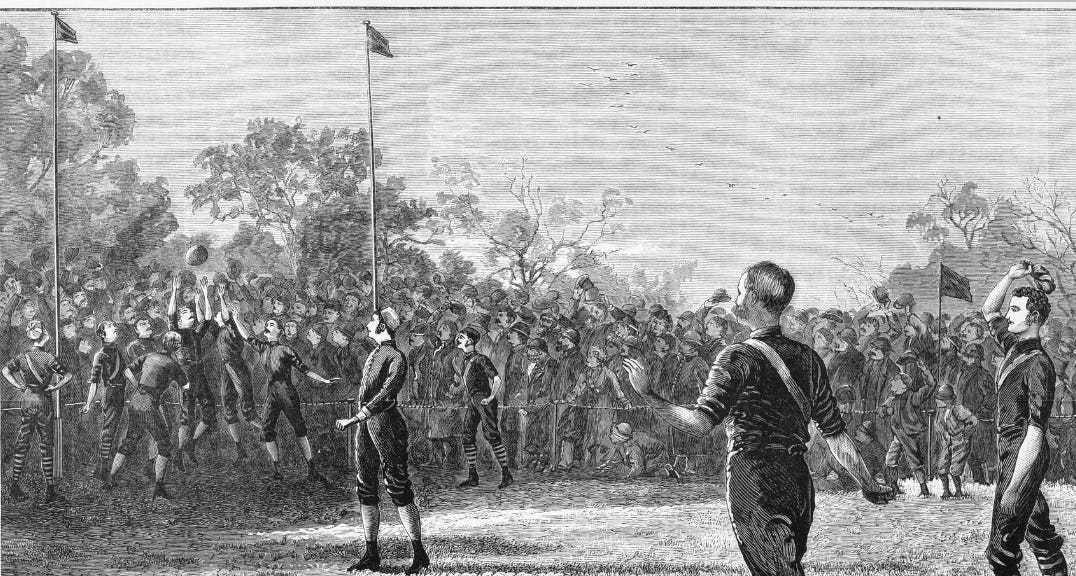
Flags were used to indicate a behind post/or boundary area for games played on an oval, as can be seen in this sketch in 1881.
But yes, the Cremeans (born in Wexford Ireland) made only 4 goals posts for the ground, courtesy of their timber yard on Swan Street. They had around 1 month as a deadline before the first practice match on April 24.
The brothers also owned/operated the Cremean Family Hotel at 291 Swan Street, which is now the Central Club Hotel.
Lawrence Cremean died in 1926, shortly before his grandson, also named Lawrence, played Reserves for Richmond in 1928.
Timothy Cremean died in 1887, two years after making the goalposts.
In this meeting, Mayor John Winn also donates a one guinea cheque (21 shillings).
Saturday March 21
FIRST PRACTICE MATCH
With the season scheduled to begin on May 2, all Richmond members and intending members were requested to attend the first practice match on the Botanical Reserve as
“it is advisable to make a start at once as the committee will thus be able to test the merits of the players by the time the season commences…all Richmond members and intending members were requested to attend.”
- Richmond Guardian
The Botanical Reserve isn’t the Botanical Gardens btw, but rather what we now know as Gosch’s Paddock. There is no record as to what the scores were.
Thursday March 26
Election of the match committee is held at the Station Hotel on the corner of Swan Street and Dover Street at 8pm. (So named because it was opposite the entrance gates to Richmond Station. The hotel was absorbed by the redevelopment of the station in 1959).
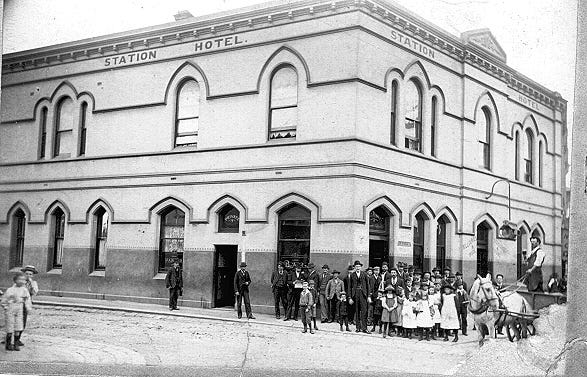
Above is purported to be an image from 1899 showing the Station Hotel, with the then licensee William Canny. (That name, and his fascinating story, will come up in Richmond’s history in 1900)
Anyone wishing to stand for the position in the match committee were to leave their names with John Asher at the Guardian Office by Tuesday 24th.
Friday March 27
Bruce Godfrey (RFC 1910) is born.
Saturday night March 28
OFFICIALLY A VFA CLUB
Richmond is accepted as a senior club (along with University) at the VFA’s meeting at the Young and Jackson Hotel
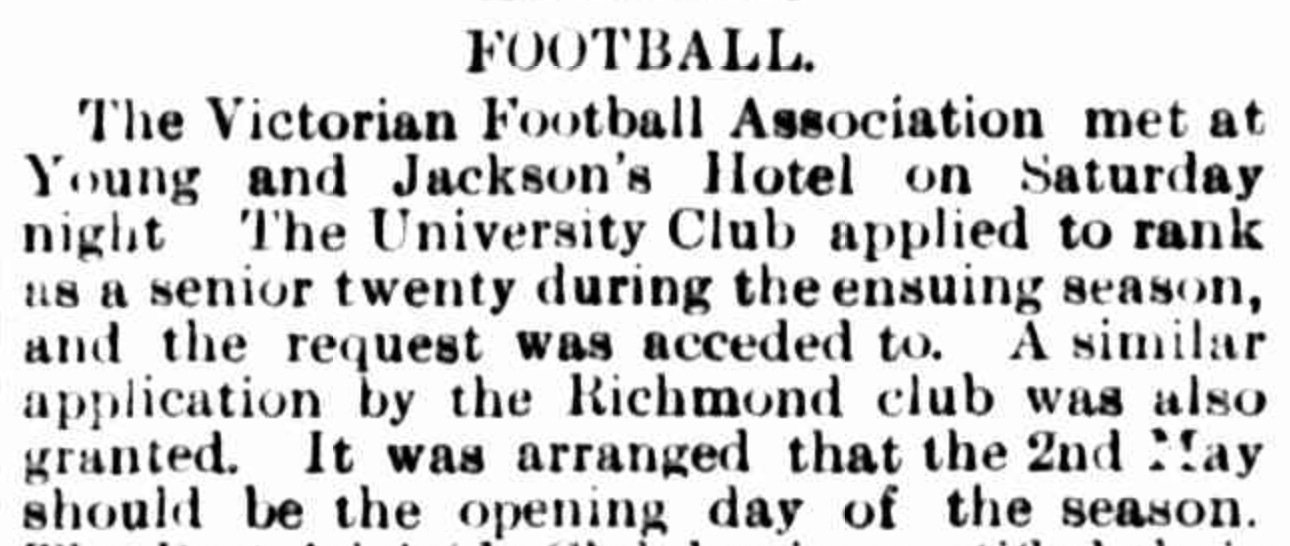
It doesn’t seem to get a mention in the Richmond Australian, and we have no idea how the Richmond Guardian reported it as their March 28 - April 11 microfilms seem not to exist.
As researcher Kieran Magee points out - Richmond and University coincidentally joined the VFL on the same date, 22 years later.
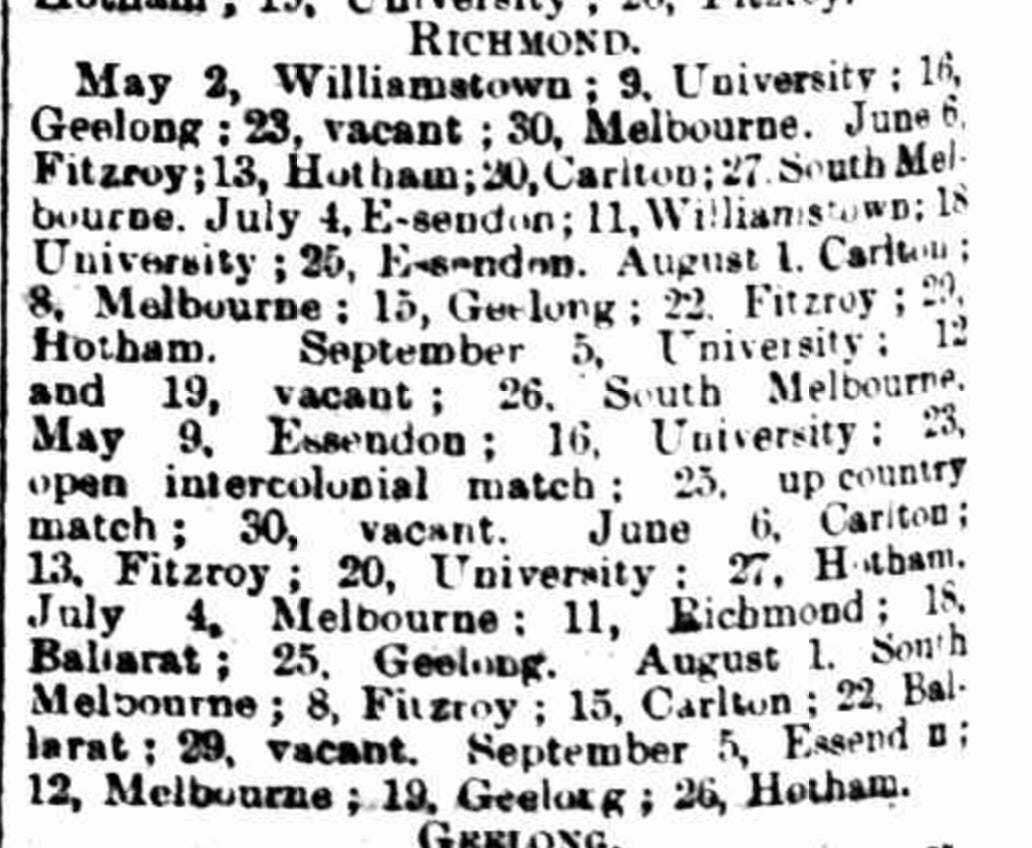
FIXTURE
Straight after that meeting, all the secretaries of the senior clubs reconvened in the same room and thrashed out the fixture for the coming season. The fixtures were published in the papers over the following week.
Thanks again Rhett for the detailed story of Richmond’s early years. Interesting coincidence re Richmond and University both being accepted by the VFA at the same time, a preview of both clubs joining the VFL together but that’s a story for another time I’m sure.